12 Best Breakfast Foods for Weight Loss and All-Day Energy
Start your day right with these 12 breakfast foods that keep you full, boost energy, and support weight loss. Includes calories and protein per serving.
Breakfast Sets the Tone for Your Entire Day
What you eat in the morning influences your energy levels, hunger patterns, food cravings, and total calorie intake for the rest of the day. A breakfast built around protein, fiber, and healthy fats stabilises blood sugar, sustains energy through the morning, and reduces the likelihood of overeating at lunch. A breakfast built around refined carbohydrates and sugar (white bread, sugary cereals, fruit juice, pastries) produces a blood sugar spike followed by a crash that triggers hunger, cravings, and fatigue within 2-3 hours.
Research from the British Dietetic Association consistently shows that the composition of breakfast matters more than whether you eat breakfast at all. A 300-calorie breakfast rich in protein keeps you fuller than a 500-calorie breakfast dominated by refined carbohydrates. Quality beats quantity every time.
Here are 12 breakfast foods that scientific evidence supports for weight loss and sustained energy.
1. Eggs — 72 calories each, 6.3g protein
Eggs are the most effective weight loss breakfast food supported by research. Studies have shown that an egg breakfast reduces calorie intake by up to 330 calories over the following 24 hours compared to a bagel breakfast of equal calories. The combination of complete protein, healthy fats, and micronutrients (choline, vitamin D, B12) creates a powerful satiety response. Three eggs with vegetables is a breakfast that keeps most people satisfied for 4-5 hours. Read our full egg nutrition guide for more details.
2. Oatmeal — 68 calories per 100g cooked, 2.4g protein
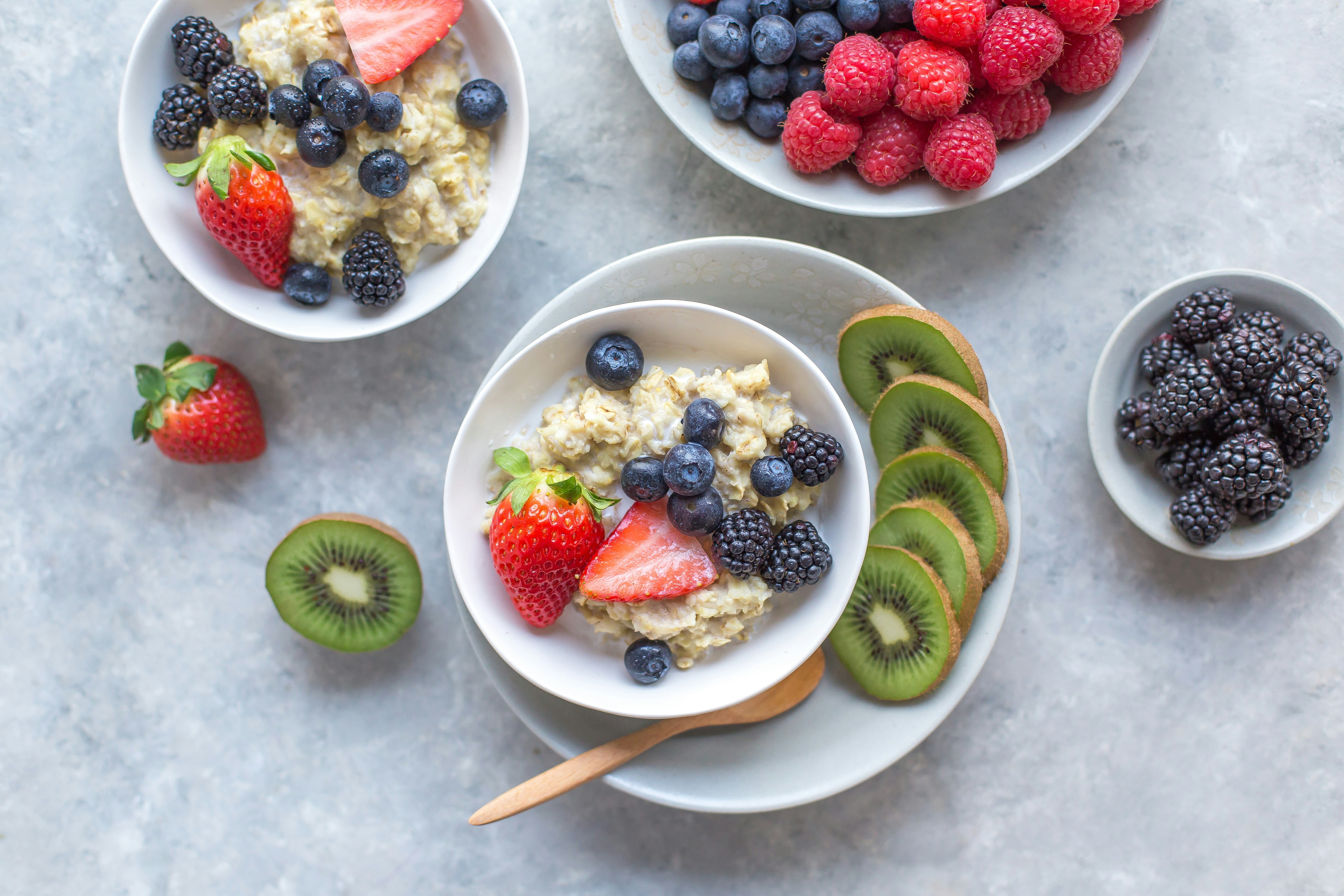
Oats contain beta-glucan, a soluble fiber that forms a thick gel in your digestive system, slowing gastric emptying and creating prolonged fullness. A bowl of oatmeal (40g dry oats cooked with water or milk) provides approximately 170-250 calories depending on toppings. Add a tablespoon of peanut butter and sliced banana for a balanced meal. See our oats vs bread comparison for the detailed nutritional analysis.
3. Greek Yogurt — 59 calories per 100g, 10g protein
Greek yogurt contains roughly twice the protein of regular yogurt due to the straining process that removes excess liquid. A 200g serving delivers 20g of protein alongside probiotics for gut health and calcium for bone strength. The Cleveland Clinic recommends Greek yogurt as one of the top high-protein breakfast options. Choose plain varieties and add your own fruit — flavoured versions often contain 15-20g of added sugar.
4. Bananas — 89 calories per 100g, 1.1g protein
Bananas provide quick natural energy from fructose alongside potassium (supporting muscle function and blood pressure regulation), vitamin B6, and resistant starch (particularly in less ripe bananas). A banana with peanut butter or alongside eggs is a balanced breakfast component. They are also the most portable breakfast — no preparation, no utensils, no refrigeration needed.
5. Peanut Butter — 588 calories per 100g, 25g protein
Two tablespoons of peanut butter (32g) provide about 190 calories and 8g of protein alongside healthy monounsaturated fats that promote satiety. Spread on whole wheat toast, stirred into oatmeal, or blended into a smoothie, peanut butter extends the staying power of any breakfast. Choose natural varieties with just peanuts and salt as ingredients.
6. Berries — 32-57 calories per 100g
Strawberries (32 calories per 100g), blueberries (57 calories), and raspberries (52 calories) provide sweetness and flavour for minimal calories alongside antioxidants, fiber, and vitamin C. The American Institute for Cancer Research lists berries among the most health-protective foods available. Add them to yogurt, oatmeal, or eat them on their own.
7. Whole Wheat Bread — 247 calories per 100g, 13g protein
Two slices of whole wheat bread provide about 160 calories, 8g of protein, and 4g of fiber, making it a solid base for egg sandwiches, avocado toast, or nut butter. It delivers substantially more fiber and nutrients than white bread. In Nigeria, look for whole wheat options from local bakeries or brands like Sari or Weyv.
8. Sweet Potato — 86 calories per 100g, 1.6g protein
Boiled or roasted sweet potato provides complex carbohydrates that digest slowly, delivering sustained energy without the blood sugar spike of refined carbs. A 200g sweet potato with two eggs makes a simple, balanced breakfast at around 320 calories. Sweet potato is also rich in beta-carotene (converted to vitamin A in the body), which supports immune function and vision.
9. Avocado — 160 calories per 100g, 2g protein
Half an avocado provides about 120 calories of healthy monounsaturated fats, fiber, and potassium. The fat content promotes satiety and slows digestion, keeping you full longer. Avocado on toast with a poached egg is a calorie-efficient, nutrient-dense breakfast. The Harvard T.H. Chan School of Public Health notes that avocado consumption is associated with improved diet quality and nutrient intake.
10. Moi Moi — 120 calories per 100g, 9g protein
For Nigerian breakfast, moi moi is an excellent choice. Steamed rather than fried, it provides plant protein and fiber from its bean base without excessive oil. Two wraps of moi moi with pap (akamu) provide approximately 320 calories with 18g of protein, making it one of the most protein-rich traditional Nigerian breakfast options.
11. Chia Seeds — 486 calories per 100g, 17g protein
Two tablespoons of chia seeds (about 28g) provide 138 calories, 4.7g of protein, 10g of fiber, and a significant amount of omega-3 fatty acids. Mixed into yogurt, oatmeal, or prepared as chia pudding overnight, they absorb liquid and expand, creating volume and fullness. The Academy of Nutrition and Dietetics identifies chia seeds as one of the most nutrient-dense foods per calorie.
12. Cottage Cheese — 98 calories per 100g, 11g protein
Cottage cheese is rich in casein protein, which digests slowly and provides sustained amino acid release. A 200g serving delivers 22g of protein for under 200 calories. Top with fruit or use as a spread on toast. It is particularly effective for people who find themselves hungry between breakfast and lunch with other breakfast options.
The Worst Breakfast Choices for Weight Loss
Sugary cereals (often 30-40% sugar by weight), white bread with margarine, fruit juice (which removes the fiber from fruit and concentrates the sugar), pastries, and sweetened coffee drinks all produce rapid blood sugar spikes followed by crashes that drive hunger and overeating throughout the day.
Use the food search tool to check the calorie and protein content of your current breakfast, and the food comparison tool to find better alternatives.
The best breakfast for weight loss is one that you enjoy, that provides at least 15-20g of protein, and that keeps you satisfied until lunch without snacking.
Tags
Look Up Any Food
Search nutrition facts for over 300,000 foods in our free database.